


Bridging the Interoperability Gap to Optimize Revenue Cycle Management
Healthcare interoperability has been one of the biggest challenges facing the industry. Although it is discussed at length, the underlying problems remain largely unresolved, even as technology advances.
According to the Agency for Healthcare Research and Quality (AHRQ), two out of three older Americans have at least two chronic behavioral or physical conditions, and the majority of healthcare spending for this population goes toward managing those chronic conditions. Fragmented workflows and a lack of interoperability make it difficult for providers and organizations to understand a patient's holistic health and deliver meaningful care. Beyond helping clinicians make informed decisions, interoperability plays a direct role in revenue cycle management for both payers and providers.
The revenue cycle is an intricate web of thousands of data points at every stage. From the moment a patient registers to the final claim and payment collection, the complexity only increases. Providers need a well-integrated system that connects one platform to the next seamlessly and supports clean claim approvals on the first pass. Done well, this strengthens revenue cycle management as a matter of course. With advanced interoperability, organizations can make decisions accurately and quickly, see fewer claim denials, improve accuracy, and accelerate cash flow.
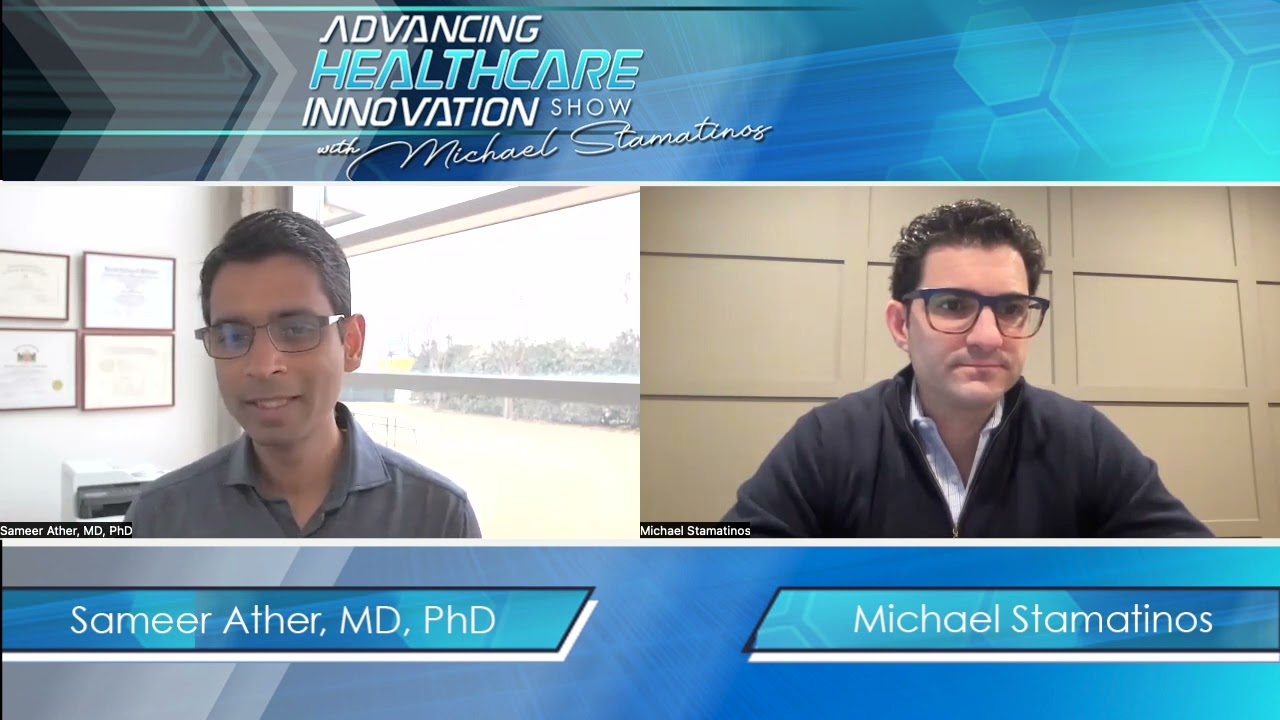
In this episode of The Advancing Healthcare Innovation Show, host Michael Stamatinos and our Co-Founder and CEO, Dr. Sameer Ather, discuss revenue cycle management in medical coding, the future of AI in medical coding, and the impact interoperability has on coding inaccuracies and delayed claims.

Takeaways from the Podcast
- •Why proper training and supervision are essential to successfully implementing autonomous AI medical coding, and why different problems call for tailored approaches.
- •How medical coding ties directly to revenue cycle management.
- •How interoperability enables seamless integration, automated processing, and fewer claim denials.
Also Listen On:


From Rare-Disease Search to Processing Billions of Data Points
XpertDox's journey began a little differently. The original mission was to build a comprehensive search and mapping platform for rare diseases and medical specialists. Along the way, access to a handful of databases helped the team uncover a significant gap: once a patient visit was over, physicians were spending too much time on the administrative work required to process claims and get paid for the services they provided.
Dr. Ather says the shift was a natural progression once that gap became clear. The biggest innovation XpertDox brings to AI medical coding is the ability to collect billions of data points from across systems and assemble them into a holistic, cohesive narrative from which valuable information can be extracted. To help organizations turn this volume of data into clear, strategic oversight, XpertDox uses a powerful BI platform, a specialized analytics hub that lets leaders draw operational insights directly from their unified clinical data.
The work does not stop at processing data. It extends to feeding that processed data back into Electronic Health Records (EHRs), where interoperability is critical. Data structures remain highly fractured, and XpertDox's technology helps bridge that gap. Today, XpertCoding processes millions of charts a year.
The Gaps in Medical Coding and Where XpertDox Fits In
Discussing medical coding as a process, Dr. Ather noted that it is rarely streamlined. Providers tend to fall into one of three messy coding workflows:
- •Providers select all of the appropriate codes themselves before sending them to insurance companies.
- •Providers insert a limited set of codes and ask a coding team to supplement the rest.
- •Providers insert no codes at all and assign the task entirely to a team of coders, either outsourced or in-house.
Each workflow carries its own challenges that affect the revenue cycle. In the first two cases, a physician's capacity to code charts is limited; accuracy suffers, and it becomes a poor use of time for both the physician and the organization.
With outsourced teams, the issues are heterogeneity and a lack of standardization. One coder may code the same clinical note very differently from another, and both can be correct. The results are variable, which can create compliance risks and leave hospitals unpaid for weeks or months.
Coding demands also fluctuate seasonally. During the COVID surge, for example, hospitals were understaffed, and even routine administrative tasks such as submitting claims fell behind by as much as 45 days in some cases, directly affecting the revenue cycle. Conversely, primary care, urgent care, and other outpatient clinics often go through a slow summer period, leaving a surplus of coders and, again, an inefficient process.
In an environment already operating on razor-thin margins, every inefficiency counts, and these inefficiencies push hospitals toward significant losses.
Debunking the Myths About Autonomous AI Medical Coding
One of the biggest misconceptions in healthcare IT is that AI is magic. Dr. Ather emphasizes the importance of training: if you feed an AI bad data, it will faithfully produce bad claims.
AI does not think the way humans do. It gathers data, structures it, and processes it. It excels at formatting and extracting information, but creative ideas and original strategies still come only from people. In autonomous AI medical coding, significant training and supervision are required to analyze claims and code them appropriately.
The Three Imperatives Driving Healthcare Organizations to XpertDox
At XpertDox, we have observed that clients tend to fall into three categories:
- •Organizations looking to scale and grow – These clients want to grow quickly. They recognize that expanding their physical footprint is impossible if their administrative backend stays anchored to linear, manual processes, so they want a solution that scales alongside them.
- •Cost-sensitive organizations dealing with manual coding inefficiencies – These clients have seen their bottom line affected and want a solution that helps. Manual coding inefficiencies, often tied to seasonal swings in volume, are a recurring pain point.
- •Innovators and early technology adopters – These clients want to stay at the forefront of innovation. When they encounter a new technology they believe in, they want to try it rather than risk being left behind.
'We all know healthcare costs are huge, and they percolate down to the end user. If we can streamline the process and bring efficiency, we help everyone. We have all felt the frustration of receiving a bill that is not accurate, where the claim submitted to the insurer does not reflect what was actually done for us as patients. It is not a pleasant experience. With XpertCoding, we are helping providers, hospitals, and patients submit those claims accurately and efficiently.'
- Dr. Sameer Ather, CEO and Co-Founder of XpertDox

About XpertDox
XpertDox is an AI medical coding solutions provider. XpertCoding, our flagship platform, accelerates revenue cycle management, reduces denials, and recovers revenue that clinics would otherwise lose. The goal is simple: less time on administration, more time with patients.
About The Advancing Healthcare Innovation Show
The Advancing Healthcare Innovation Show highlights what healthcare innovation looks like in action. Guests include healthcare entrepreneurs, providers, payers, and professionals from the investment community, who share both their small wins and the lessons learned from setbacks along the way.
About Michael Stamatinos
Michael Stamatinos is a healthcare leader whose mission is to make healthcare accessible to all. He is the founder of the Advancing Healthcare Innovation Consortium, where he draws on two decades of experience in healthcare delivery, business development, and strategy to build ecosystems that enable sustainable growth. As host of the Advancing Healthcare Innovation Show, he has created a dynamic platform for knowledge exchange and industry-wide collaboration.